
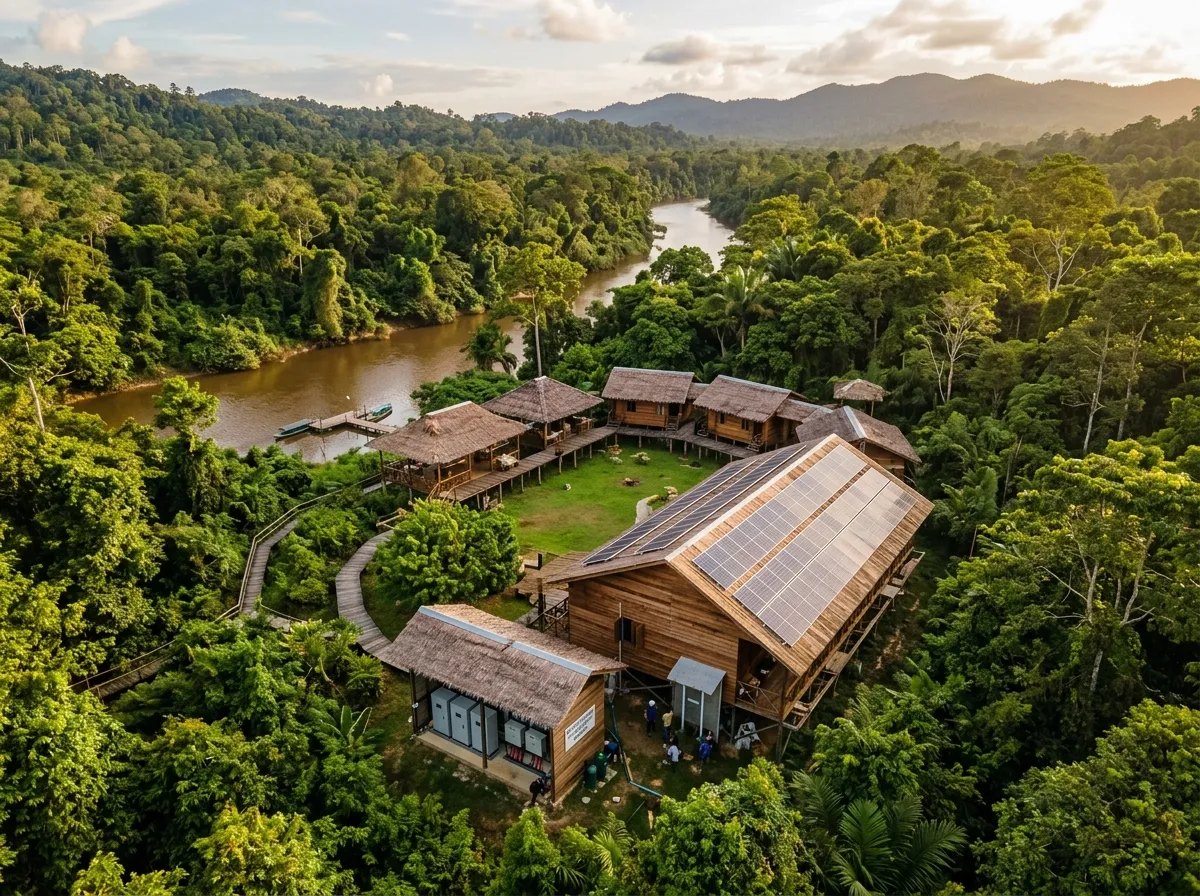
Off-grid solar systems replace or reduce diesel generators for remote sites where the electrical grid does not reach. These systems combine solar panels, lithium batteries, and smart inverters to work fully automatically: solar charges batteries during the day, batteries power equipment at night, and an optional backup generator starts only when needed. Off-grid is ideal for island resorts, rural villages, plantations, telecoms towers, and remote farms across Sabah.
Who Needs Off-Grid Solar in Sabah?
Off-grid solar brings reliable, cost-effective electricity to locations beyond Sabah Electricity Sdn Bhd (SESB) distribution. Key applications include:
- Island resorts and eco-lodges: Semporna, Tawau, Lahad Datu—no submarine cables feasible.
- Rural electrification: Villages enrolled in SARES (Sabah Alternative and Renewable Energy Supply) programme.
- Plantations and farms: Oil palm, cocoa, and remote agricultural operations that cannot wait for grid extension.
- Telecoms towers and repeaters: Remote transmission sites that require 24/7 uptime.
- Water treatment and pumping: Rural water systems, fish farming, and irrigation in unelectrified areas.
- Isolation research stations: Forest monitoring, wildlife reserves, research camps.
How Do Off-Grid Solar Systems Work?
An off-grid system is a closed-loop energy machine that operates independently of the electricity grid. Here is the architecture:
- Solar PV array: Rooftop, ground-mounted, or floating panels generate DC electricity during daylight.
- Charge controller: Regulates voltage and current from the panels to the battery bank, preventing overcharge and damage.
- Battery energy storage (BESS): Lithium batteries (LiFePO4) store energy generated during the day for use at night and during cloudy periods. Capacity is sized to match 1–3 days of full autonomy.
- Inverter: Converts stored DC power back to AC (230V, 50Hz in Malaysia) for household appliances, machinery, and equipment.
- Optional diesel/LPG genset: Automatic backup when battery state of charge falls below a safe threshold (typically 20%). Genset charges the batteries and can power high-load equipment simultaneously.
- Monitoring system: Real-time dashboard shows generation, consumption, battery level, and system health. Alerts notify operators of faults.
Diagram labels: Solar array → Charge controller → BESS (lithium) → Inverter → AC loads. Genset connects to charge controller and inverter via automatic transfer switch.
Easy Solar Off-Grid Projects Across Sabah
Easy Solar has delivered and maintains several landmark off-grid installations:
| Location | System Size | Battery Storage | Application |
|---|---|---|---|
| Sukau Rainforest Lodge (Kinabatangan) | 161.25 kWp | 307 kWh | Eco-resort (120 guests), hot water, AC |
| SARES Bintulu (rural electrification) | 103 kWp | Not disclosed | Village grid, 45 households |
| SAWAS Sibu (solar water system) | 104 kWp | — | Water treatment, 24/7 pump operation |
| Semporna Island (beachfront resort) | 20 kWp | 100 kWh | Guest accommodations, kitchen, office |
These projects demonstrate that off-grid solar is scalable—from small island chalets (20 kWp) to major resorts (161 kWp) and village grids (103 kWp).
Cost Considerations and Diesel Savings
Off-grid systems cost more upfront than grid-connected solar, but payback is fast because they eliminate or drastically reduce diesel generator fuel expenditure.
Cost comparison: Diesel costs approximately RM3–5 per kWh (fuel, maintenance, transportation in remote areas). Solar-generated electricity costs RM0.30–0.50 per kWh when amortized over 25 years. That is a 10x reduction in operational costs.
Typical off-grid cost breakdown for a small island resort (20 kWp + 100 kWh BESS):
- Solar panels and racks: RM35,000–40,000
- Lithium battery bank (100 kWh): RM80,000–110,000
- Inverter, charge controller, wiring: RM25,000–35,000
- Installation labour and commissioning: RM15,000–20,000
- Total system cost: RM155,000–205,000
- Monthly diesel savings: RM4,000–6,000 (vs. generator-only operation)
- Payback period: 26–52 months (2–4 years)
Larger systems (100+ kWp) benefit from economies of scale and lower per-kWh costs. A 161 kWp system like Sukau Lodge's typical cost is RM2–3 million, but saves RM25,000–40,000 monthly in diesel—payback in 5–10 years with 25-year system life.
Frequently Asked Questions
How much battery do I need for off-grid?
Battery capacity depends on your days of autonomy. Most systems are sized for 2–3 days of full independence (so the genset runs only 1–2 times weekly). For example, if you consume 100 kWh per day and want 3 days of storage, you need 300 kWh of usable battery. In practice, use 70–80% of nominal capacity to preserve battery lifespan, so you would install 375–430 kWh nominal.
Do I still need a diesel generator with off-grid solar?
For most sites, yes—a small backup genset (10–30 kW) is recommended as a safety margin. It starts automatically if the battery drops below a safe level (usually 20% SOC) during extended cloudy weather or equipment failure. Gensets typically run only 1–4 times per month, so diesel consumption drops 90% compared to generator-only operation. Some very sunny sites with large battery banks can operate without a genset, but this adds cost and risk.
What happens on cloudy days or during monsoon?
The battery bank supplies power. Most systems are sized so that 2–3 days of cloudy weather can be absorbed by battery reserves without genset activation. If cloud cover extends beyond this autonomy period (rare but possible during monsoon), the genset automatically starts to charge batteries. This is why battery sizing is critical and why genset backup is prudent in Sabah.
Can I expand an off-grid system later?
Yes, but expansion requires careful engineering. Adding more solar panels is straightforward, but expanding the battery bank is complex because lithium systems require matched hardware (same chemistry, voltage, BMS protocol). Plan for 20–30% spare capacity in your charge controller and inverter during initial design to accommodate future growth. Easy Solar can advise on expansion-ready architecture during system design.
Design Your Off-Grid System Today
Our engineers will assess your location, load profile, and autonomy goals to design a custom system that pays for itself in 2–4 years.
Chat on WhatsApp